Snatched, Silenced, and Sold: How the Beauty Industry Is Erasing Women’s Faces
Women are being erased and replaced by digital ghosts, as the beauty industry profits billions from manufactured female insecurity. AI-driven algorithms and social media filters have reshaped our standards until natural human features are seen as flaws.
This is the new face of control but it can end if we say ENOUGH.
The Commodification of Female Insecurity
Last week, SKIMS (the billion-dollar shapewear empire founded by Kim Kardashian) quietly launched a new addition to its product line: the Seamless Sculpt Face Wrap, a compression garment advertised to “snatch” the face, sculpt the jawline, and define the cheeks.
I’m happy to report, the backlash was swift. (It also quickly sold out).
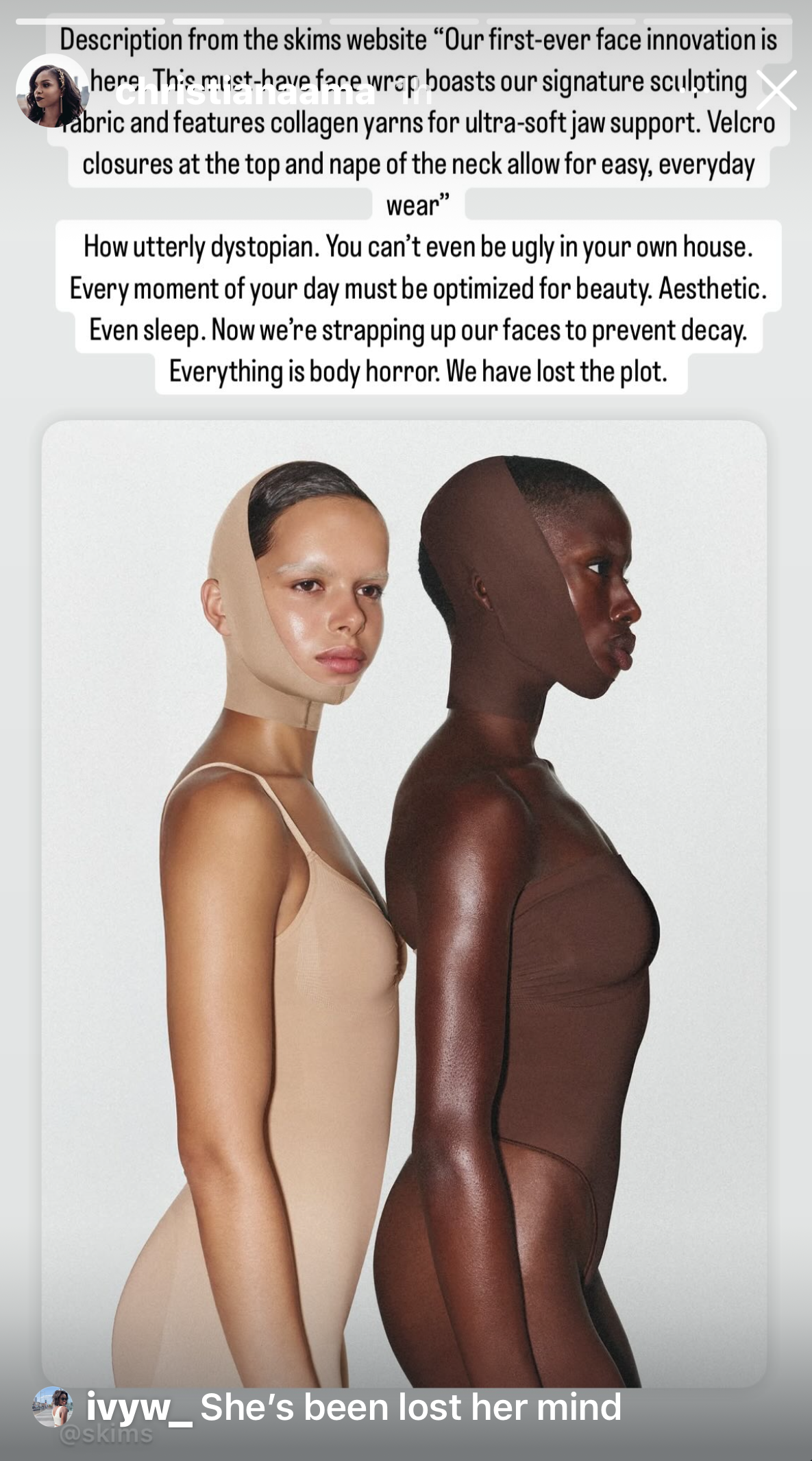

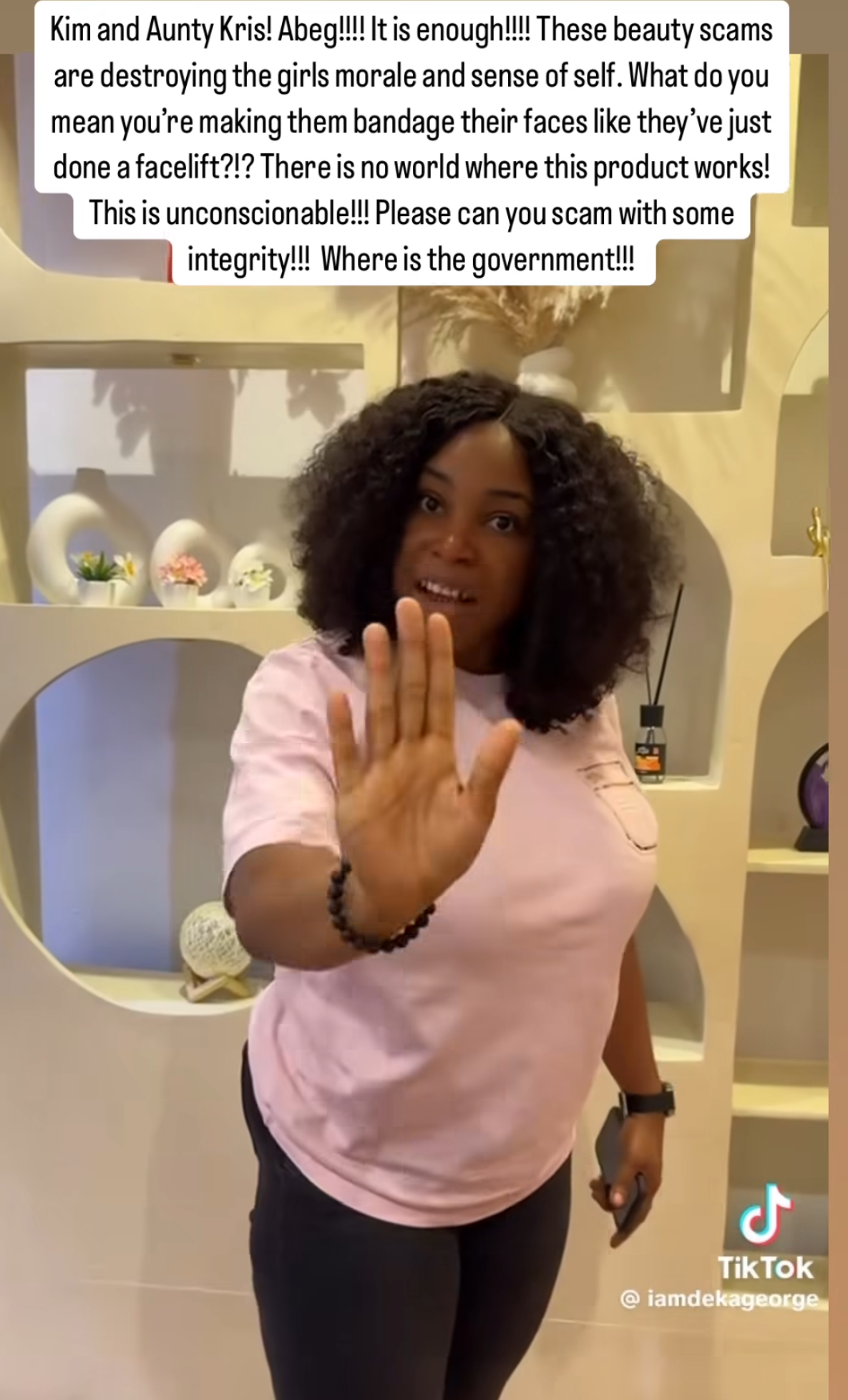
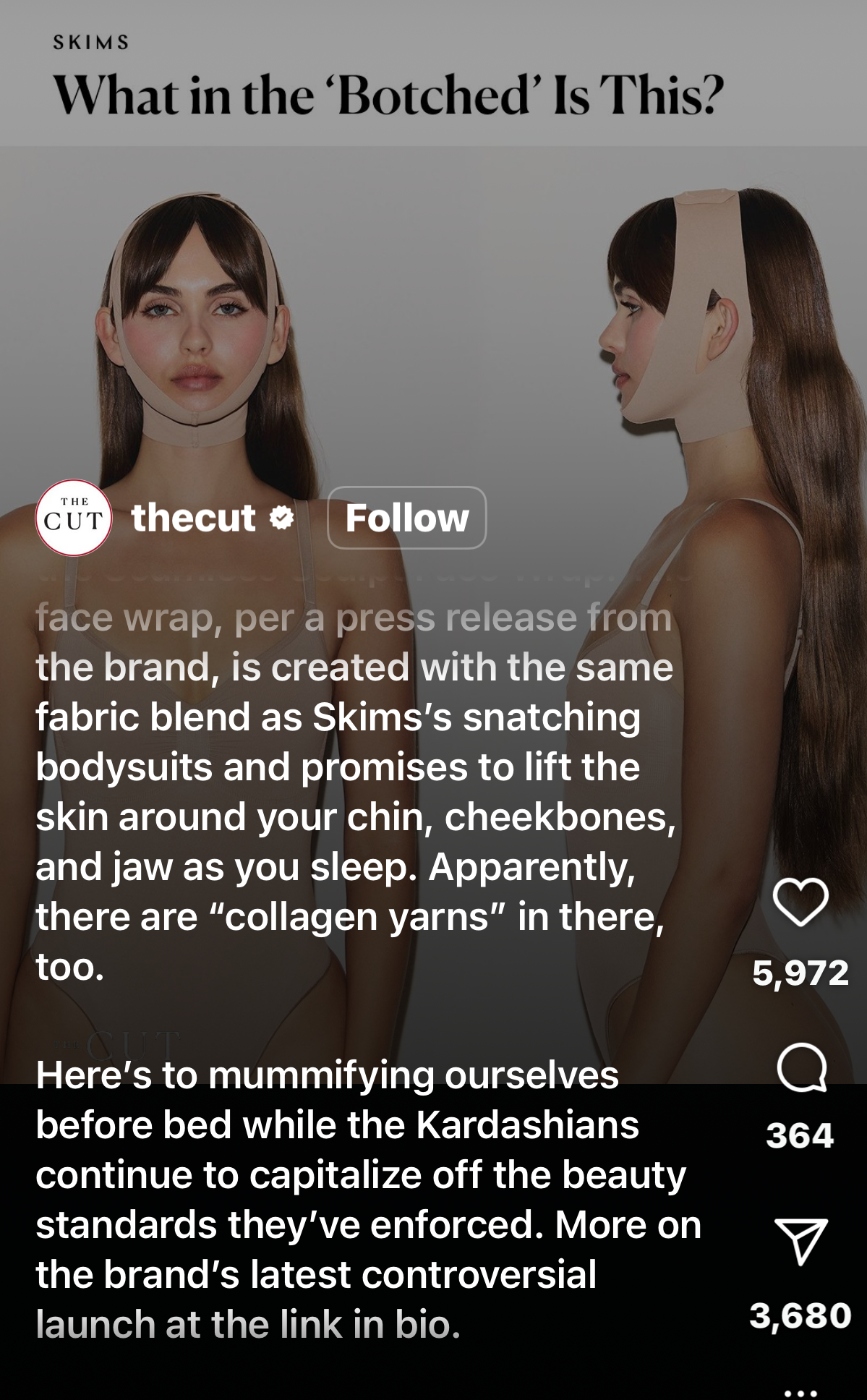

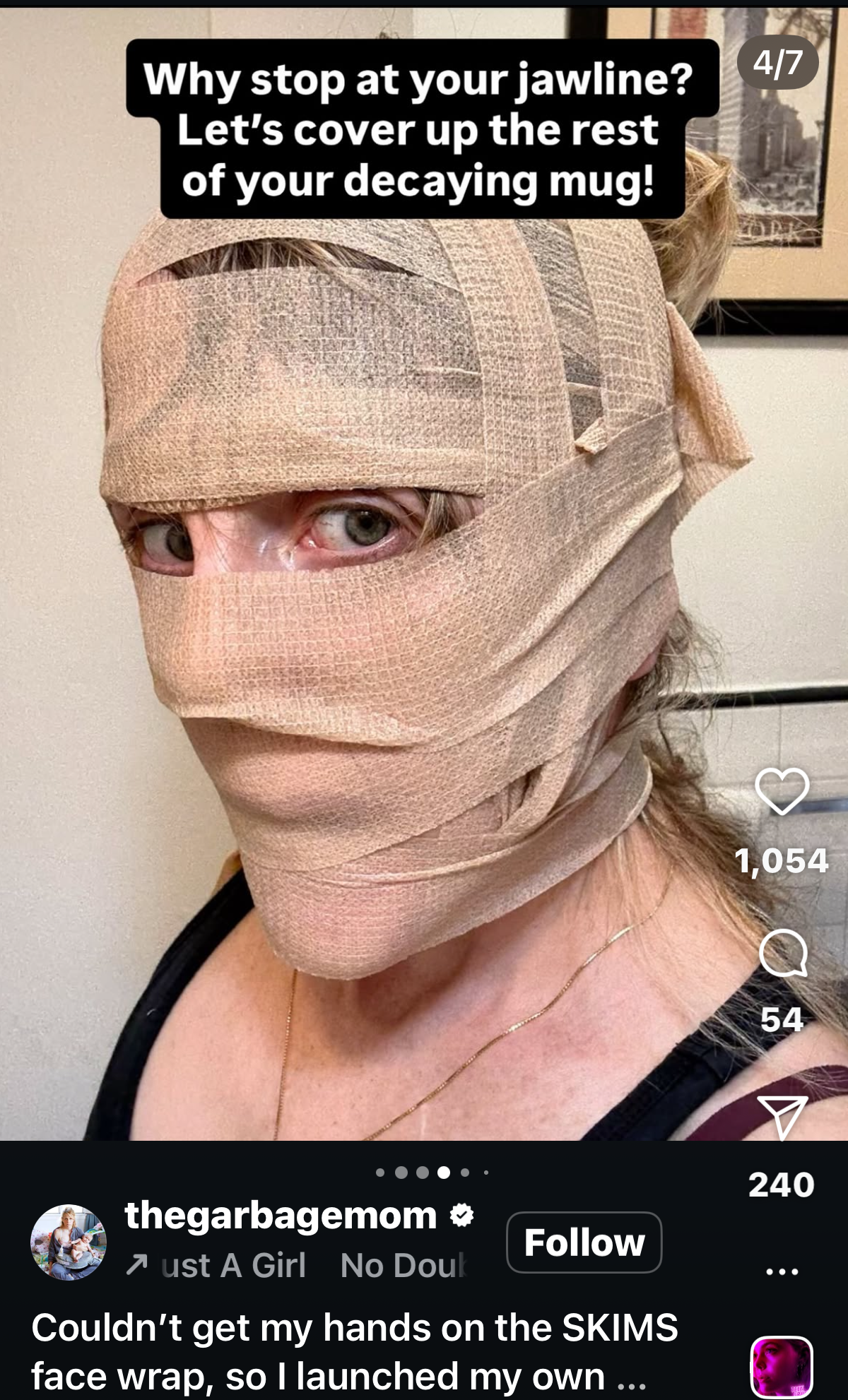
“Why do we have to constantly change and reshape ourselves just to be seen as beautiful?” asked one commenter in BuzzFeed’s coverage of the launch, echoing a sentiment that has become increasingly common in digital spaces that are simultaneously complicit in (and critical of) the beauty machine.
We are incessantly bombarded with a barrage of beauty commands, demands and offerings. But this time, when I saw the SKIMS face wrap, it stirred something in me much deeper. I went straight to my computer to journal and vent.
That same day, my father sent me and my sisters a CNN news segment in which a Beverly Hills plastic surgeon warned of the dangers of filler, a procedure which has seen a massive uptick in the wake of what the beauty industry is calling “Ozempic face,” a hallowed face due to rapid weight loss.
This surgeon, pretending to sound the alarm while drumming up business, said something I can’t stop thinking about: “Aging is not for everyone.”
Let’s be clear: aging is for everyone. It’s quite literally the only thing every single human has in common and it’s the most universal experience there is.
But this ridiculous statement, alongside the SKIMS face muzzle, said everything. This isn’t just about one absurd product. It’s about an industry, and a culture, that has engineered our insecurities and turned them into profit.
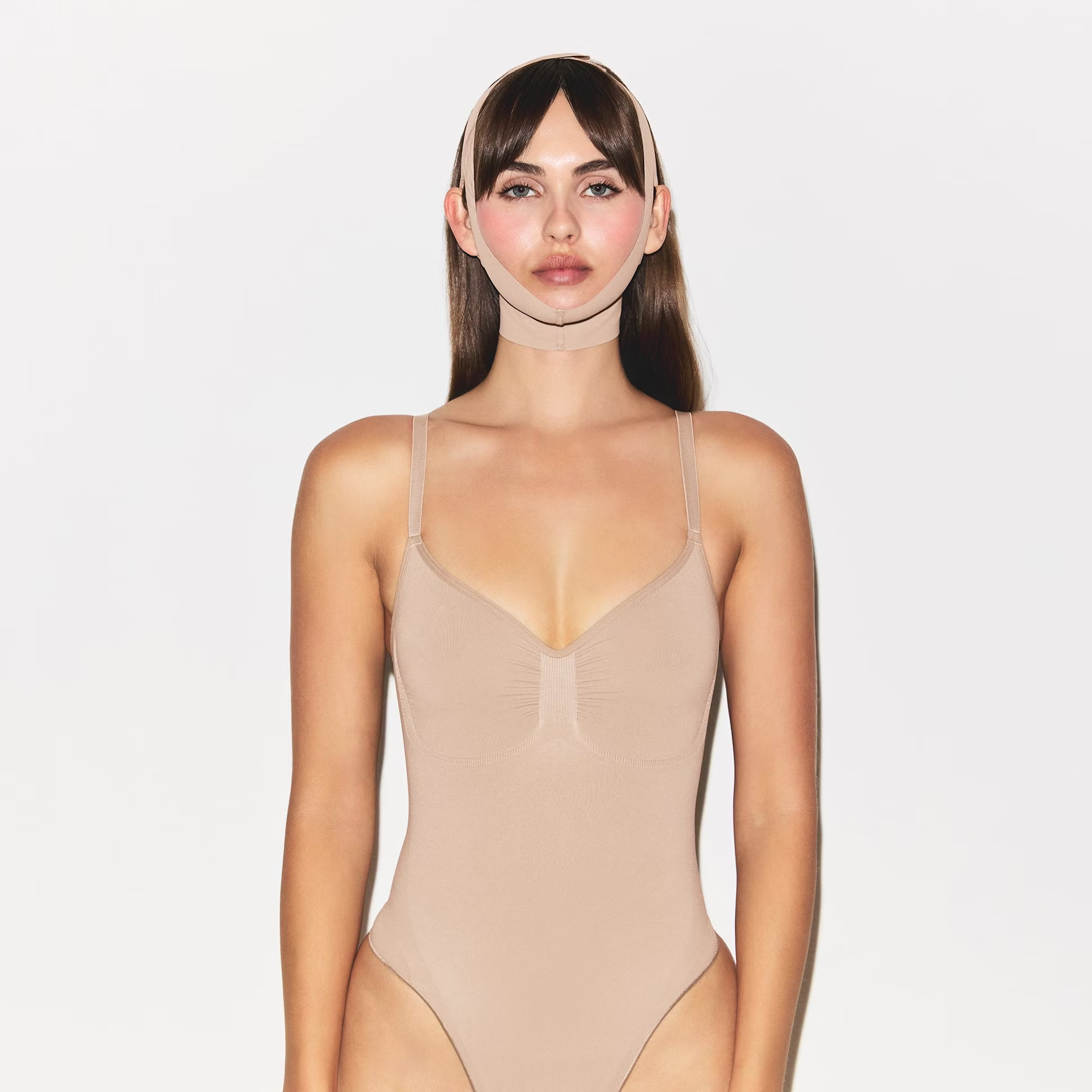
Women aren’t just being told to age “gracefully” anymore, which was bad enough. Nope.
We are now aging into a new, even more intense kind of societal surveillance. Women are now commanded to not age at all. And we are expected to remain digitally pleasing in the filtered, AI form we see online. More Instagram Face. Less human.
This is the commodification of insecurity. And it’s happening in plain sight.
What kind of world are we living in where looking “snatched” is the goal?
Where the human face is seen as a flaw to be fixed? Where women are being erased and replaced by digital ghosts?
What kind of world have we built where appearance is everything, and that appearance has become so detached from reality?
The Algorithm as Aesthetic Authority
Somewhere along the way, we went off the rails on a crazy train. We are no longer merely living through trends. We are living through presets. Facial symmetry, contouring, the elimination of pores, the elevation of cheekbones, they are defaults.
Every major social media platform is complicit.
Instagram has face-smoothing filters that erase texture and symmetry. TikTok’s “beauty” mode narrows jaws, lifts eyes, and shrinks noses. Snapchat built its empire on filters that morphed faces into cartoonish ideals. Even Zoom now offers “touch up my appearance” settings by default. These aren’t neutral tools. They’re digital distortions that train our brains to see our real, unedited faces as flawed. And now, with generative AI and real-time video manipulation, the pressure is no longer just to present a curated life—it’s to present an artificially perfected face that doesn’t exist offline. We are rapidly moving from editing photos to editing identities, and the line between what’s real and what’s augmented is disappearing.
And now, with generative AI and real-time video manipulation, the pressure is no longer just to present a curated life, it’s to present an artificially perfected face that doesn’t exist actually offline. We are rapidly moving from editing photos to editing identities, and the line between what’s real and what’s augmented is disappearing.
Writer and editor Jia Tolentino observed in her New Yorker essay The Age of Instagram Face, that the new beauty ideal was not born of culture, but of convergence. It has become a homogenized blend of “high cheekbones, catlike eyes, button nose, full lips, and a poreless, lineless, expressionless visage.” Tolentino explained:
Instagram Face is a new form of beauty ideal that has never existed before—it requires high-tech tools, both digital and surgical, and the face it promotes is racially ambiguous, yet distinctly white-adjacent.
This face is not real. It is not even aspirational or attainable. It is manufactured by the invisible hand of filters, facial-recognition algorithms, and the monetization of biometric sameness. And like all manufactured ideals, it requires tools to approximate it. Tools like the SKIMS face wrap.
The face wrap is not just absurd. It’s dangerous. It’s a weaponized version of a Snapchat filter.
Now, instead of just being made to feel like we should shrink, conceal, and refine our bodies, we’re being offered literal mechanisms to bind ourselves into submission. In pursuit of a completely fabricated ideal. In the privacy of our own homes!
And while this ridiculous face binding might at first glance appear to be just another extension of the beauty economy (and the Kardashian/Jenner relentless assault on female identity) it is, in fact, a powerful symbol of a much deeper cultural illness: a society so distorted by filters, AI, and algorithmic aesthetics that it no longer recognizes a human face unless it has been digitally or physically altered.
The SKIMS face wrap is quite literally the wearable rendering of the face-tuning tools embedded in every smartphone app.It cinches the jaw and flattens the face in the exact places AI filters would digitally manipulate.
As podcaster Christiana Mbakwe Medina put it in a recent Instagram post, there is something “utterly dystopian” about this product…”Everything is body horror. We have lost the plot.”
How the hell did we get to a place where wrapping our faces in a muzzle passes as “self-care”? We’ve handed billion-dollar brands a blank check, funding their empires while they sell us our own erasure. And for what?
Every day, we hand over our bodily autonomy, our thoughts and our capacity for joy, to an algorithm that profits from our self-doubt and then incessantly shoves that insecurity right back down our throats.
It’s time we call it all out and give women another choice – to live free and without shame.
Selling Shame
The Kardashians get a ton of shit – as they should – for driving and then profiting off female insecurity.
But it isn’t just a Kardashian problem. The exploitation of female insecurity is a cultural crisis.
Since we are on the topic of facial filler, here are some alarming stats on: In 2023, the U.S. facial injectables market surpassed $7 billion. And in 2024, driven in part by the rise of GLP-1 medications like Ozempic, the global facial injectable market ballooned to over $12 billion.
Beauty has become a commodity. A game of endless upgrades in pursuit of a moving target defined by algorithms and advertisers.
Brands like SKIMS rake in billions off our disorientation. They exploit a void they helped create, selling solutions to the very insecurities their founders amplified with heavily filtered selfies, inaccessible standards, and a surgically curated public image (pun intended).
They wrap it in a pretty bow and call it “self-care,” “female empowerment,” or “aging gracefully” (GOOP, we’re looking at you). But this isn’t empowerment. It’s not self-care.
In fact, to frame anti-aging and beauty products as empowering is to fundamentally misunderstand the nature of coercion. These are not tools of choice, but of pressure.
And that pressure is omnipresent.
As I’ve said before, and something we want to scream from the rooftops at Riotess, the beauty industry isn’t about beauty. It’s about conditioning.
It’s a business model that works by destabilizing women’s sense of self and then offering them tools to rebuild it closer to an algorithmically acceptable form.
The beauty industry has perfected body dysmorphia as a business model.
Let me scale it back a bit for a moment. Because while the beauty industry is here to intentionally shame us, RIOTESS is not.
We’re not here to judge women who buy into this (or who have already preordered the SKIMS face wrap). But what we are doing, and will continue to do, is point out the systemic manipulation of women so that there is an alternative discourse.
Really only once we’ve weeded out the problems will women have the freedom to choose something else. Or not.
Power to the women who want to continue to wrap and zap their faces. You do you.
And for the women who are done contorting themselves to a computer-generated version of a human…this is your time to shine.
So what do we do? How do we fight back against something woven so tightly into our daily lives and collective conscience?
We start by identifying the problem. Talking about it. Sharing it. And from there, we reclaim our voices, our faces, our bodies, and the freedom to define our existence on our own damn terms.
Your Turn - Make it Loud
We see it. We name it. And then we fight it.
At RIOTESS, especially after a spicy post like this one, we like to end with a few tools you can take with you—to help navigate the sea of BS thrown your way every day.
So, here are a few ways to push back against the algorithm and the brainwashing:
Unfollow. Unfollow anyone who makes you feel less than even if they’re popular, polished, or branded as “aspirational.” If their content makes you question your worth or pushes “beauty” products that prey on insecurity, unfollow. Full stop.
Call it out. When you see brands or influencers peddling bullshit “empowerment” products, say something. Name it. Shine a light on it.
Protest. Use your social media feeds and profiles to get loud. Your social media is your space. Take it back. Post your thoughts. If you’re feeling it, post your unfiltered face. Explain why you’re doing it. That’s rebellion.
Resist the scroll-to-cart spiral. Try a 24-hour cooling-off period before buying anything on social media that is marketed to “fix” you. Almost every time I do this, I realize I don’t want it. I don’t need it. And I never did.
Talk about it. With your friends. Your sisters. Your daughters. Make this a conversation. Its such an important one.
Get out. Away from the mirror. Off the apps. Into your body. Do the things that bring you joy, that build your strength. The more you move in the real world, the less power the fake one has over us.
A Final Thought
Beauty is far more expansive, expressive, and wildly individual than we are being told. Beauty is not just physical. It’s your voice. Your presence. Your sense of power. It shows up in how you love, how you lead, how you treat others, and how you move through the world.